Julie Donec
A Contemporary Portrait and Figurative Canadian Artist
Goldfinch
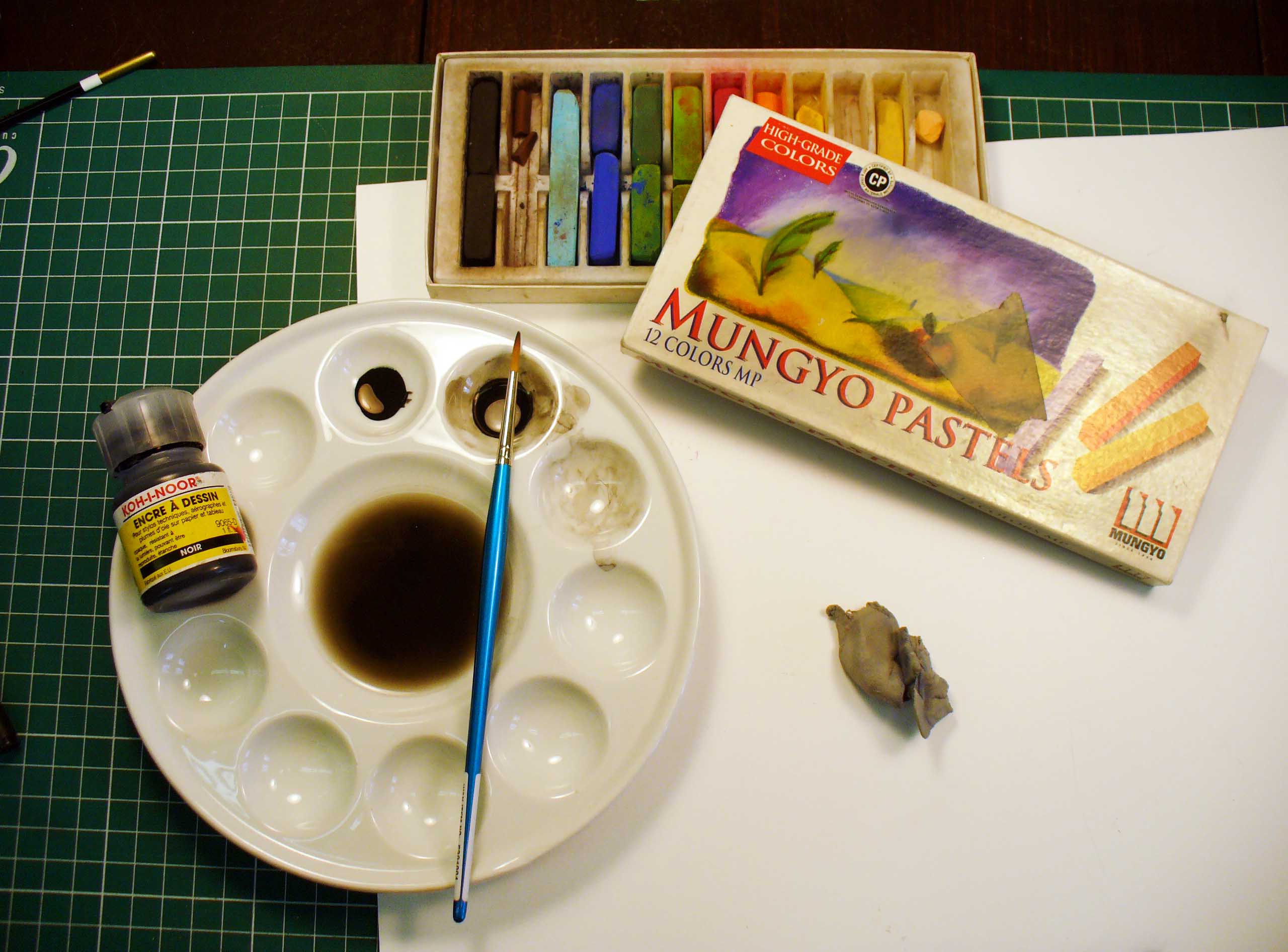
Inking the image and defining forms
To keep the drawing from smudging after I’ve completed the chalk transfer, I use waterproof India ink to draw in the forms. This stabilizes my drawing, and also establishes the mass tones I’ll need to build up my painting. This method was commonly used by many artists of the period.
I’ve used a small watercolour brush, and a ceramic tray and distilled water to dilute the ink, and I begin to build up the form using a drybrush technique. Fabritius is the master of the ‘loaded brush’; or, as I see it, he establishes a firm underpainting, and then quickly and simply lays on a scumbled load of paint to create highlights and textures. To help me establish the forms and prepare them for the ‘loaded brush method, I usually use a mix of umber paint thinned with turpentine. Since the chalk was so unstable, (that is, that it transferred easily, but was very prone to smudging), I thought that laying in the basic forms with a small brush and India ink would do the trick. Go to the next image to see the progress of the inking.
Picture 4 of 8